


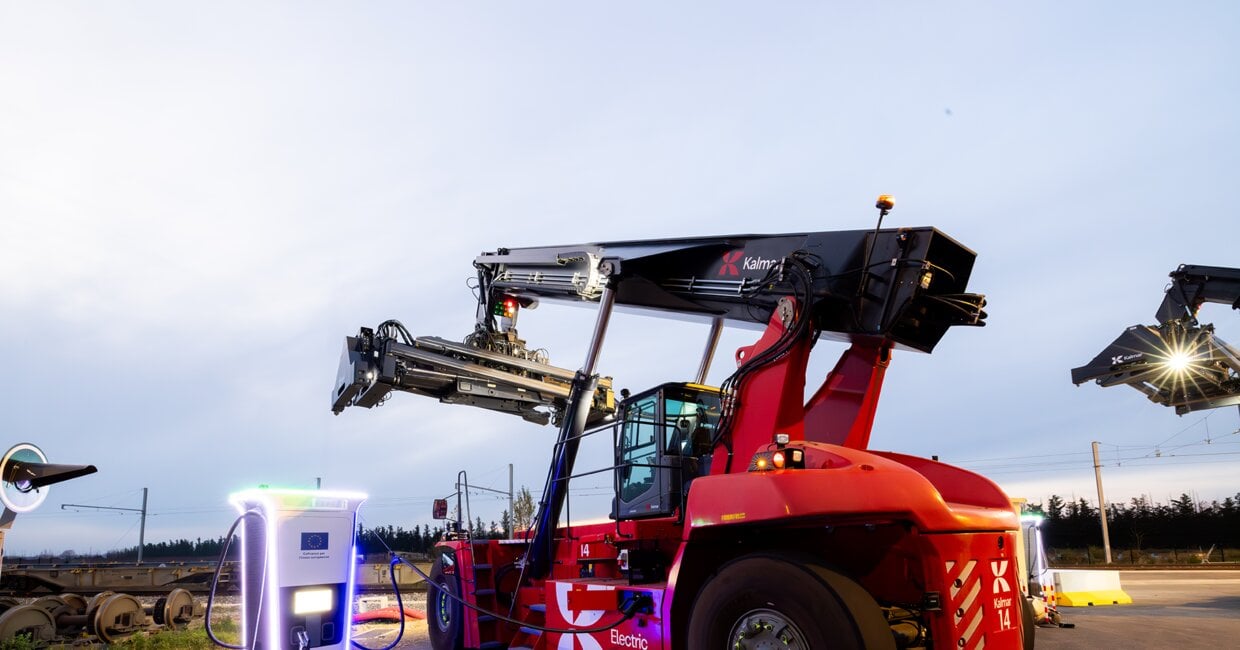
Optimising Performance and Longevity of Electric Load Handling Equipment through Expert Service
Introduction
This white paper provides a condensed summary of the impacts of switching to battery-electric equipment for maintenance organisations in the ports, terminals and material handling industries. The document focuses primarily on heavier classes of equipment that have only seen electrification in recent years (reachstackers, straddle carriers, terminal tractors, heavy forklift trucks etc.) as a result of the development of high-voltage lithium-ion battery technology. However, many of the findings are also relevant for equipment such as light forklift trucks powered by Li-ion batteries.
In this paper, the terms ”battery-electric” and ”electric” are used interchangeably to denote horizontal transportation equipment powered by onboard batteries, as contrasted to traditional diesel-electric machines in which the drive and hoist systems of the machine may be electric but in which the source of power is an internal combustion engine.
This paper is not intended as an exhaustive guide to the topic, and all safety and maintenance procedures described in the document are presented as simplified examples for illustrative and informative purposes only. For detailed information and professional advice on how to service and maintain battery-electric equipment, please consult a qualified expert partner such as Kalmar Services.
This white paper complements Kalmar’s existing white papers Outlook on Lithium-ion Batteries for Material Handling Equipment and Port Electrification and the Road to Zero Emissions, available for download at www.kalmarglobal.com.
2 Executive summary
Ports, terminals and other companies in the logistics and material handling industries are currently in transition to fully electric (battery-powered) equipment. Although smaller machines such as light forklift trucks have been battery-powered for many years, the electrification of heavier classes of industrial equipment including reachstackers, straddle carriers and heavy forklift trucks has taken longer to reach maturation.
The electrification of heavy container and material handling equipment has been driven by the rapid development of high-voltage Lithium-ion (Li-ion) battery technology, and, more specifically, its incremental adoption in heavy road vehicles and buses. Although technically very different from port and terminal equipment, heavy road vehicles have served as the mass-market testbed for the battery and charging technologies that enable the electrification of heavy equipment.
From a maintenance perspective, battery-electric equipment introduces numerous new requirements for all levels of the business, from service organisations to local maintenance teams and individual technicians. These can be summarised mostly as a crucial need to acquire new specialist competence to work safely on high-voltage Li-ion battery systems, either through in-house training or by sourcing the work to the equipment manufacturer or a service partner. When maintained according to the appropriate instructions and safety guidelines, battery-electric equipment is straightforward and extremely safe to work on, but the correct procedures must be followed at every step.
Battery-electric equipment also introduces changes to the type and frequency of maintenance work carried out on equipment fleets. The removal of the diesel drivetrain from the machine will lead to less scheduled maintenance, as engine oil and filter changes are no longer required. However, most of the wear and tear on the machine’s load handling components and other systems will still be exactly the same on a battery-electric machine, so the difference in scheduled maintenance requirements will not be as dramatic as, for example, on a consumer electric car.
On electric machines, planned preventive maintenance becomes increasingly important. The battery modules on an electric machine are essentially maintenance-free, but they require scheduled checks by qualified technicians to ensure safe operation and optimal performance. Due to the complexity of the maintenance procedures on high-voltage battery-powered equipment, terminal operators may find it advantageous to have the service of their electric equipment handled by the manufacturer or an expert service partner, instead of developing all the required competence in-house.
3 Background and trends
Electrification is one of the key trends in the ports and terminals industry, and operators around the globe are moving consistently towards fully electric container and material handling equipment. This is driven largely by the need to meet increasingly stringent regulatory requirements and stakeholder expectations for zero-emissions operations, but also by the increasingly competitive total cost of ownership of battery-electric equipment.
Li-ion battery technology has emerged as the de facto standard for electric road vehicles and industrial equipment. Offering significantly higher energy density and better performance than traditional lead-acid batteries, li-ion technology has continued to develop rapidly over the last several years, opening up possibilities for its utilisation in progressively heavier classes of machines. Numerous other battery chemistries are being developed, but in this paper we focus on li-ion technology.
Battery-electric container handling equipment is generally charged with standard + GB/T and CHAdeMO charge interfaces. Additionally, specialised solutions such as the pantograph-style Kalmar FastChargeTM system are available to enable hands-free charging of heavy equipment. In late 2025, Kalmar announced the availability of the first Megawatt Charging System (MCS) for straddle carriers, which significantly speeds up the charging of heavy container handling equipment. The development of the solution is in line with current initiatives for international standardisation of the MCS interface for heavy equipment, and it will be available as an automated version in the future.
4 State of electrification in the ports and terminals industry
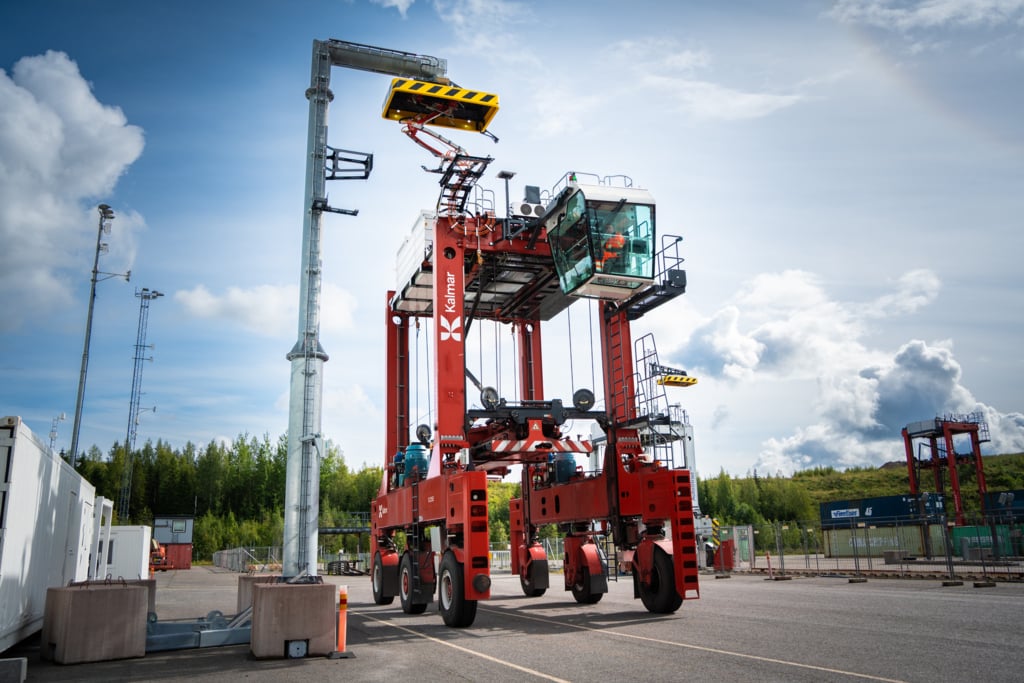
On one hand, the electrification of container and material handling equipment is a relatively recent trend driven by the confluence of zero-emissions sustainability goals, the maturation of li-ion battery technology, and the growth of the electric road vehicle market. On the other hand, it is the latest step in an evolution that has been in progress for decades. Kalmar’s first light electric forklifts were introduced in 1980, and the same period already saw the first prototypes for electric heavy container handling equipment. However, the lead-acid battery technology of the time was not yet practical for a heavy-duty industrial solution.
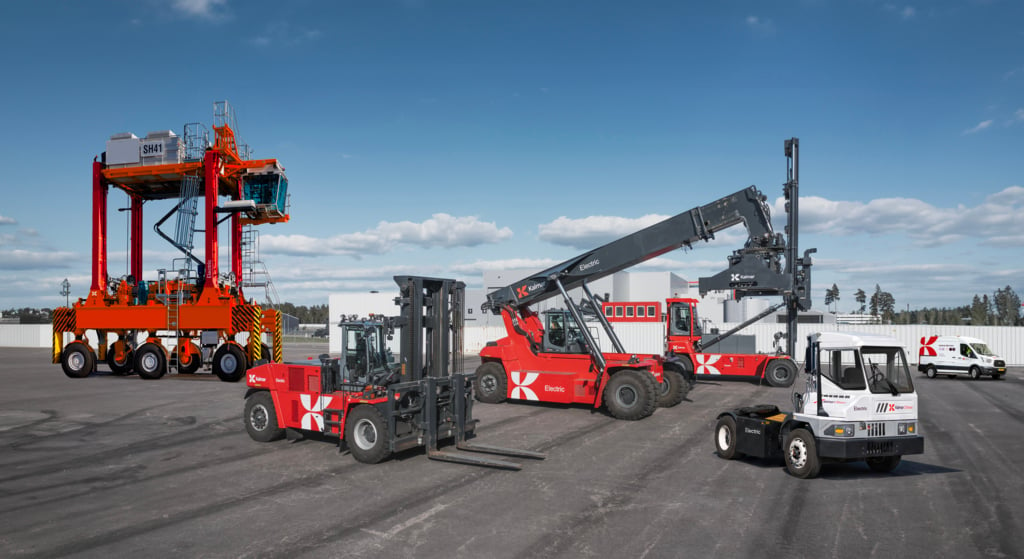
Kalmar launched its fully electric portfolio in 2021, consisting of a wide range of material handling equipment from the electric reachstacker to the heavy, medium, and light forklifts, empty container handlers, terminal tractors as well as straddle carriers. At the time of writing (early 2026), Kalmar’s full equipment portfolio is available as electric, except for the very heaviest forklift trucks and reachstackers, as well as a few individual container handler models. It is expected that with the continuous development of lithium-ion battery technology as well as megawatt-level charging solutions, electrification will eventually extend to essentially all horizontal transportation and material handling machines at ports, terminals and industrial applications.
Buses and road trucks lead the way in heavy vehicle electrification
In battery-electric heavy road vehicles, sales of electric buses are currently far ahead of other heavy-duty vehicle segments including medium and heavy-duty trucks.
In 2024, over 20% of new cars sold worldwide were electric, with total sales growing over 25% from the previous year.
In 2023, some 3% of buses sold worldwide were electric, bringing the total deployed stock of electric buses around the world to about 635,000.
In the same year, the sale of electric road trucks surpassed buses for the first time, but the sales share of electric trucks in the heavy vehicle market is still very marginal, approximately 1.5% in Europe and less than 0.1% in the US.
Global EV Outlook 2025: Trends in electric car markets / International Energy Agency
https://www.iea.org/reports/global-ev-outlook-2025/trends-in-electric-car-markets-2
https://www.iea.org/reports/global-ev-outlook-2024/trends-in-heavy-electric-vehicles
The majority of light forklifts sold worldwide are already electric, but the electrification of heavy equipment at ports and terminals is still a relatively niche product area, with manufacturing volumes that are a fraction of consumer EVs or even electric buses or trucks. However, from a technical standpoint, the market for battery-electric heavy road trucks is highly relevant for the ports, terminals and material handling industry, as many of the battery and charging technologies used in heavy trucks will find their way to industrial and logistics applications, bringing the benefits of mass-production economies of scale and standardised solutions.
As battery-electric heavy trucks gain popularity, many of the lessons learned in how to maintain these vehicles may also be relevant for port and terminal operators seeking to develop service models for their electric fleets. The growth of the electric heavy vehicle market will likely also benefit operators through the wider availability of technicians trained for high-voltage battery systems.
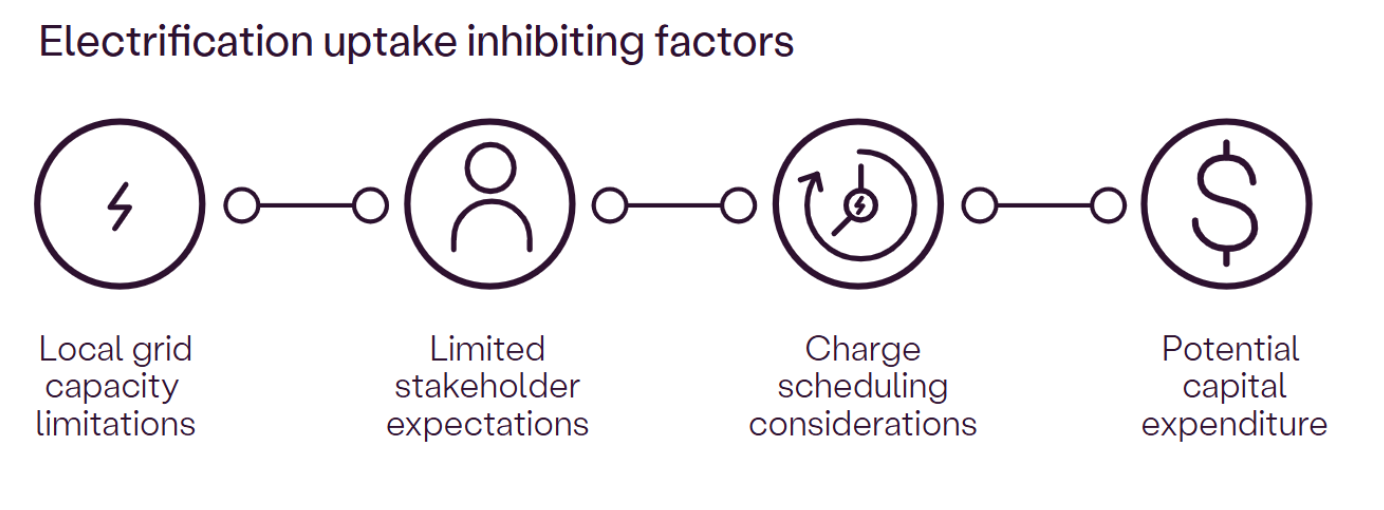
Inhibiting factors for electrification
Electrification is the natural and expected next step for many terminals, at least when evaluated as part of a long-term strategy for fleet renewal; few terminals today are considering all-diesel or even traditional diesel-electric for their planned fleet upgrades ten years from now.
However, there are also factors that can hold back terminals from transitioning to full-electric operation. These include limitations in local electrical grid capacity, limited or no stakeholder expectations towards electrification, considerations related to charge scheduling, and the potential capital expenditure of installing the required charging systems. In some countries, terminal locations designated as nationally critical infrastructure may also be required to maintain diesel-based container handling capacity that is not dependent on grid power.
5 What has changed? What has not?
The advent of battery-powered electric equipment can be compared to, for example, the transition from carburettors to computer controlled electronic fuel injection and ignition systems in cars in the 1970s and 1980s. New technologies always bring new service requirements and operational changes for maintenance staff, as well as new competencies.
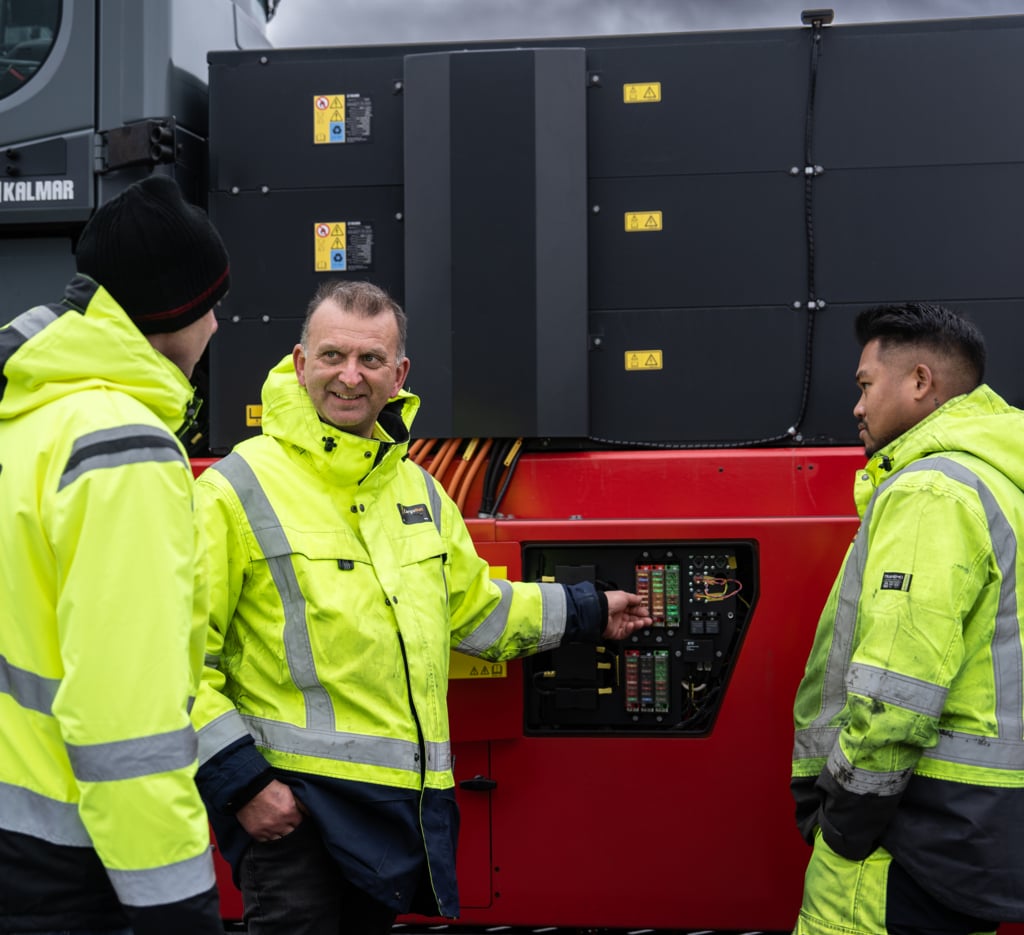
From a maintenance perspective, battery-electric equipment does have many significant differences to legacy systems based around diesel engines, whether these machines are all-diesel, diesel-electric or hybrid drive. Removing the diesel powerplant will change the profile of the required maintenance work significantly, and the introduction of high-voltage onboard batteries demands an entirely new set of competences from technicians and maintenance organisations.
Compared with diesel-powered machines, battery-electric equipment has numerous additional benefits that improve the occupational well-being and safety of both equipment operators and service technicians. Electric equipment is very quiet in operation, has minimal vibrations and does not produce any exhaust emissions. With no diesel fuel on the vehicle and no engine oil changes required, service work is cleaner with significantly lower potential for exposure to harmful chemicals or fumes.
A reachstacker is not your Tesla
In recent years, consumer electric vehicles have decisively entered the mainstream. Initial concerns about operational range, charging times and the sufficient availability of charging infrastructure have largely proven to be unfounded, as charging stations have become commonplace and drivers have learned to accommodate the special requirements of EVs in their trip planning and scheduling.
From the point of view of port and terminal operators seeking to electrify their fleets, this familiarity with EV technology can be both an asset and a conceptual pitfall. On one hand, seeing electric vehicles in everyday use helps validate their utility; if we don’t personally drive an EV, we know many friends and colleagues who do, and they have all managed to arrange their car usage within the parameters of the new technology.
On the other hand, this experience with road cars can lead to an inaccurate set of expectations when it comes to the maintenance of battery-electric industrial equipment. Compared to petrol or diesel-powered cars, consumer EVs have very little regular maintenance in the traditional sense. Apart from recommended tire rotation (10,000 km) and brake caliper lubrication (20,000 km), the only scheduled maintenance items on a Tesla Model 3 are wiper blade replacement once per year, cabin air filter replacement every two years and brake fluid checks every four years.
Tesla Model 3 Owner’s Manual / Service Intervals
https://www.tesla.com/ownersmanual/model3/en_us/GUID-E95DAAD9-646E-4249-9930-B109ED7B1D91.html
With no oil changes and oil filter replacements, and no engine coolant checks, the basic paradigm of scheduled car maintenance has essentially ceased to exist from the point of view of the car owner. However, it is crucial to understand that a heavy container or material handling machine such as a reachstacker, forklift truck or straddle carrier performs under an entirely different operational regime from an electric car.
Even with a full-electric driveline, container handling equipment is still a working machine subject to the same mechanical wear and tear on its load-handling components as its diesel-powered counterpart. For this reason, heavy-duty electric equipment in ports and terminals cannot be directly compared to consumer electric cars with their very long service intervals. Yes, there will be somewhat less maintenance due to no oil and filter changes, but the difference in scheduled maintenance needs will not be as radical as with electric cars, and possibly not as dramatic as terminal operators might expect.
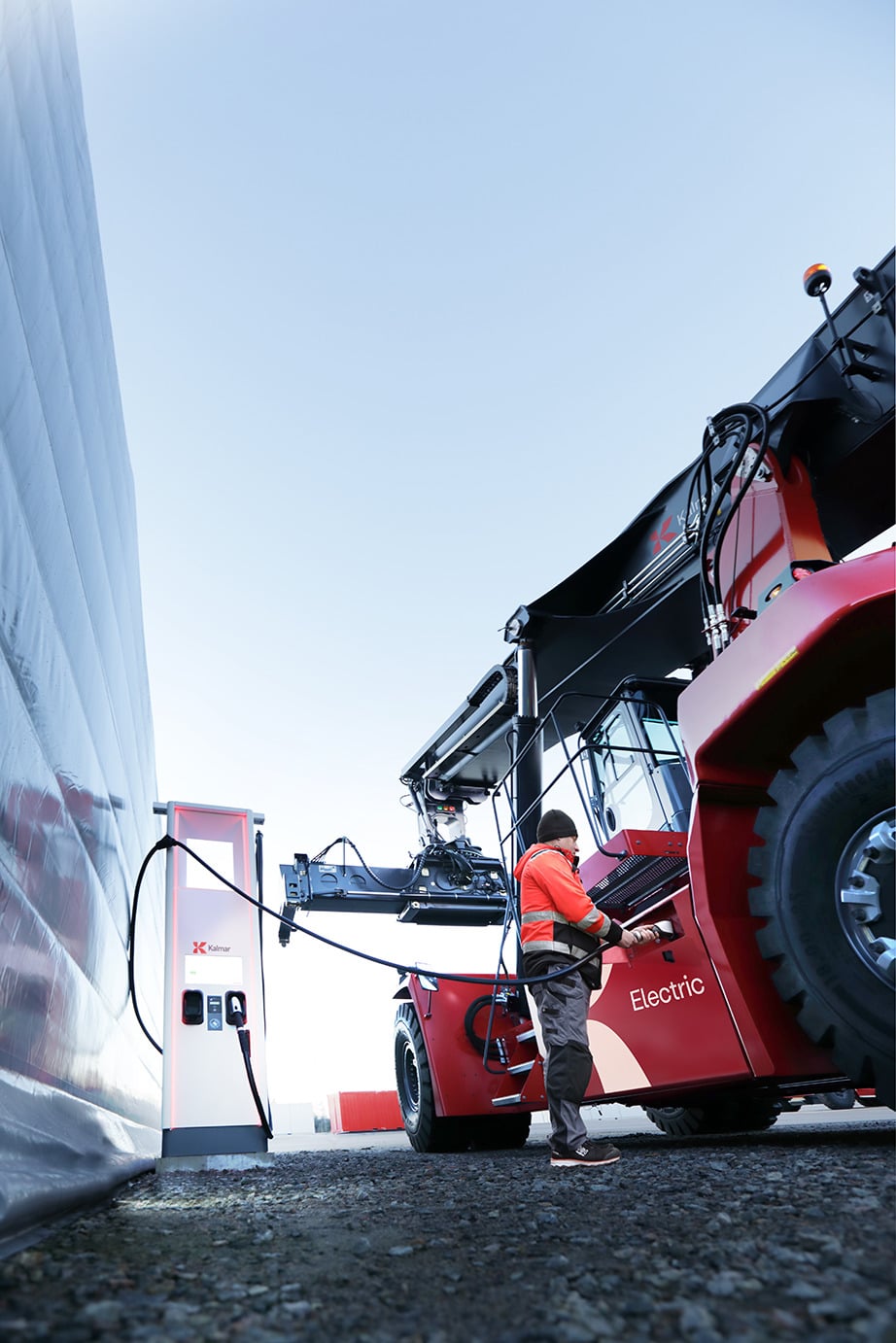
Another way to understand this core difference is by comparing the expected operating hours of passenger cars and container handling equipment. Assuming an average speed of 70 km/h, 100,000 km of driving in a car equates to about 1,400 operating hours. By contrast, Kalmar equipment has an expected operational lifetime of at least 20,000 hours - the equivalent of 1.4 million km of driving for a passenger car.
The exact figures will depend significantly on the specifics of the operation, machine type and many other factors, but as a rough guideline, a reduction of around 20–25% in maintenance costs is usually a realistic expectation when switching to battery-electric equipment.
Fewer parts, lower costs
A diesel engine is the most mechanically complex part of any vehicle, so removing it from the machine will have the effect of reducing the need for spare parts to a measurable degree. With no need to repair or replace injectors, fuel pumps, sensors, drive belts and other engine parts, a significant portion of traditional maintenance work will be removed from the equation.
Battery-powered machines have far fewer moving parts, and the li-ion battery packs used in heavy-duty machinery are generally so reliable that they can’t even be evaluated with traditional Mean Time Between Failure (MTBF) metrics. As a rule, the battery modules on Kalmar machines are rated to last the entire service lifetime of the machine, however, to ensure reliable and safe operation, they also need scheduled checks as part of a regular preventive maintenance programme.
To summarise, the most significant change from the transition to battery-electric equipment is that the amount of regular maintenance needed will be somewhat smaller, but this service will require a very specific set of competences and additional expertise. Planned preventive maintenance will also become more important.
Will the batteries outlive the machines?
Today’s LFP batteries offer a very long lifetime, but naturally it depends on usage. As an example, a 533 kWh battery in an electric reachstacker doing 15 lifts per hour and operating 2000 hours per year could have a first life (until 70% of the original capacity is left) of up to 15 years. After the first life, there will be a second life for the battery, for example as energy storage.
6 Safety requirements
From a safety standpoint, the most significant difference in battery-electric machines compared to traditional diesel-powered equipment is, firstly, the presence of high-capacity li-ion batteries onboard the machine, and secondly, the high voltage of these batteries. With nominal system voltages typically in the range of 600 to 800 volts, the safety requirements are entirely different from the traditional 24 V electrical systems on heavy vehicles.
The increase in electrical system voltage is the most significant added risk that maintenance technicians need to be aware of when working on battery-electric machines. For example, when measuring the voltage in the control unit and wiring harness of a diesel engine, the risk of injury or equipment damage from an incorrectly executed procedure is low. By contrast, on a high-voltage machine, even a single step that is performed wrong can lead to a serious accident. However, if the correct procedures and manufacturer documentation are followed, battery-electric machines are very safe to service and maintain.
Know what you are doing
An analogy can again be made with a prior technical transition in the automotive industry, this time with the adoption of airbags in the 1970s and 1980s. Despite the possibility of serious injury when mishandled, airbags have become a routine service item that does not cause any additional danger or concern when handled by trained technicians according to the appropriate maintenance and safety procedures.
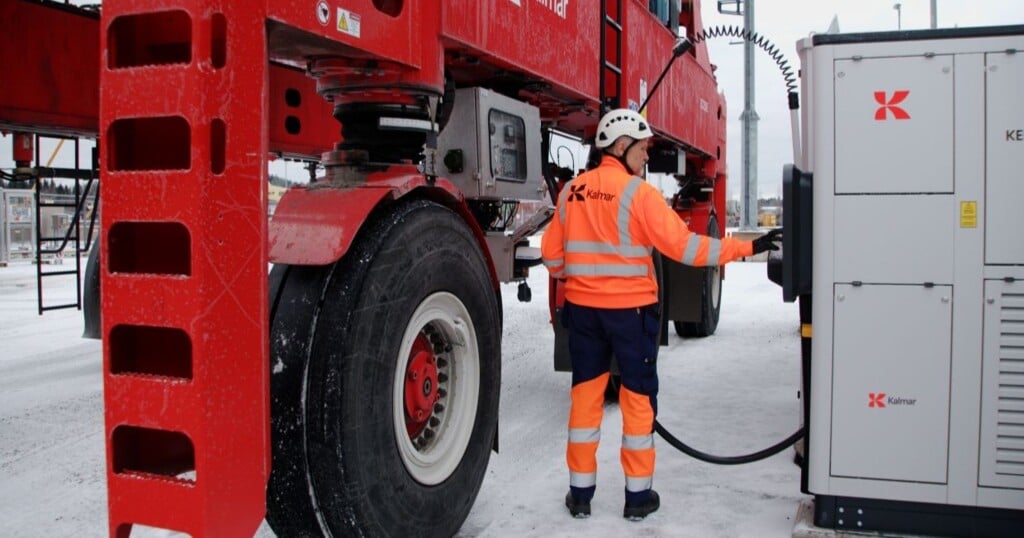
In a similar fashion, high-voltage battery-electric equipment has very specific service and maintenance procedures that need to be followed precisely to ensure safety, from cordoning off the work area to ensuring that the required technical safeguards and physical safety devices for the specific type of machine are in place. The requirements will vary based on equipment type, specific company procedures and national/regional legislation, but the key consideration is that additional training and/or qualifications will certainly be required for technicians and possibly for organisations when servicing high-voltage battery-powered equipment.
As an example, the power-down procedure on an electric reachstacker involves a coordinated sequence of over two dozen steps that need to be carried out in the correct order, including voltage and insulation measurements at specific electrical terminals on the machine. This is markedly different from merely flipping a breaker switch to disconnect the battery on a traditional diesel machine with 24 V electrics.
Seek help when needed
It is crucial to note that all the other systems on the machine (mechanical and load-handling components, suspension, brakes, hydraulics, tires etc.) will be serviced exactly as before. However, the presence of the high-voltage systems on the machine needs to be considered when doing any other work on the machine, even if these systems are not being worked on directly.
Other requirements for battery-electric machines include the crucial importance of temperature management, both for safety and to ensure the optimum performance and lifetime of the li-ion batteries of the machine. For the same reason, dust and dirt are more critical on battery-powered equipment, as the thermal management system of the machine may be compromised if cooling components or condensers are clogged.
Due to the complexity of the maintenance procedures on high-voltage battery-powered equipment, terminal operators may wish to turn to a trusted expert partner such as the original equipment manufacturer to handle the service of their electric equipment, instead of having to develop all the required competence in-house.
To summarise the key requirement for both technicians and maintenance organisations, working on high-voltage electric equipment is safe and straightforward if you are trained for electrical work and the specific procedure and have the appropriate documentation, but potentially hazardous otherwise.
7 Infrastructure
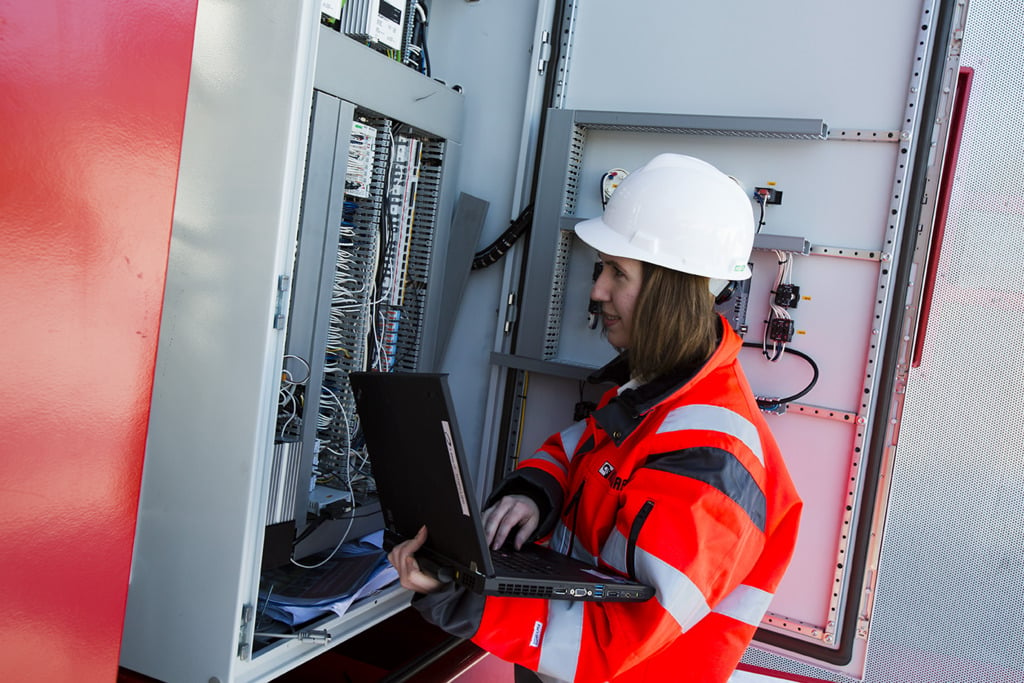
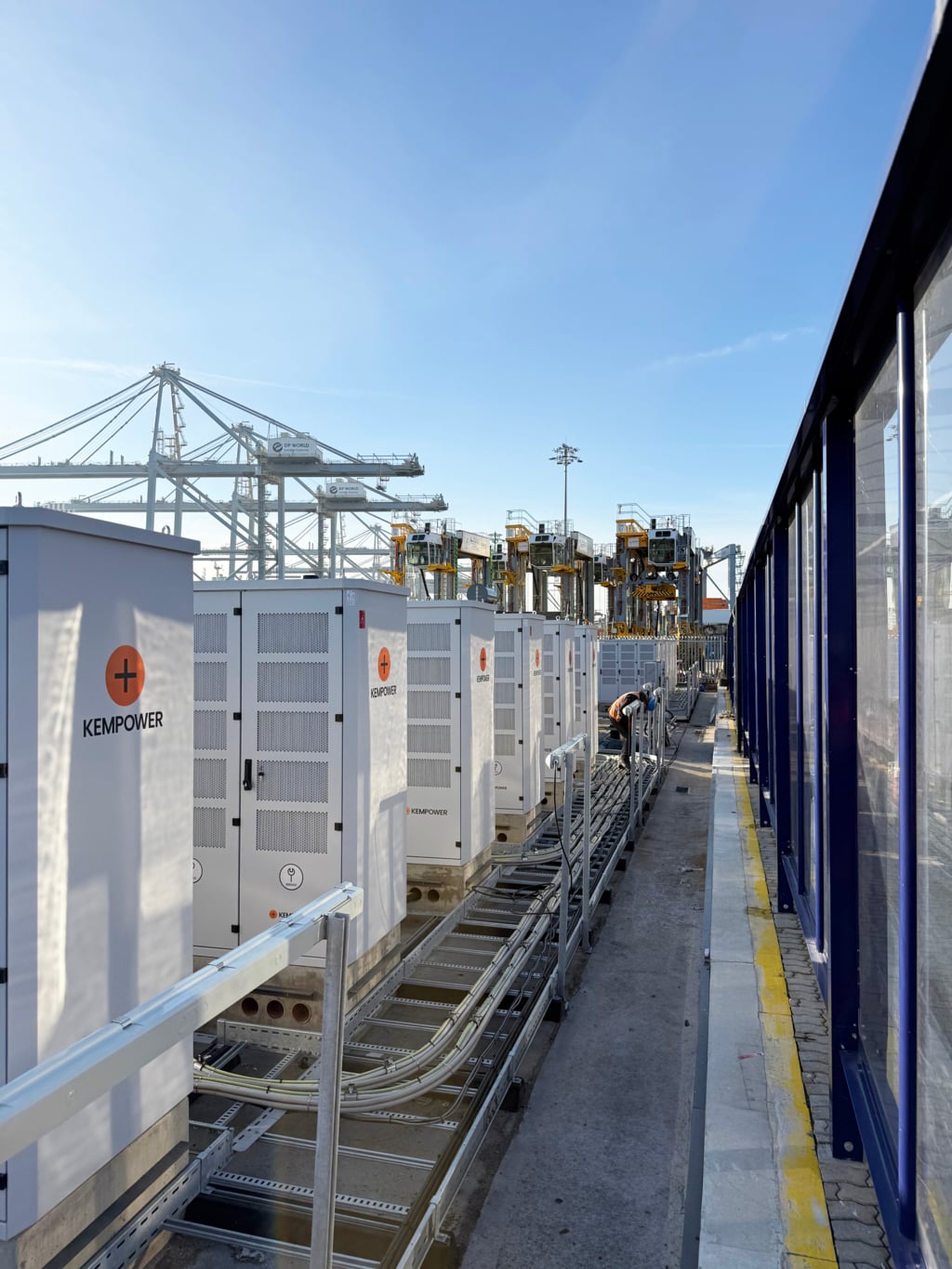
In addition to the actual onboard battery systems, electric equipment will require a dedicated charging infrastructure, generally based on the traditional CCS interface and possibly complemented by solutions such as Kalmar FastChargeTM or the newer MCS interface. Depending on the terminal, some or all of this infrastructure may fall under the maintenance responsibility of the terminal operator.
It is important to understand that for container and material handling equipment, the charging system is a mission-critical component of not only the vehicle, but also the entire terminal infrastructure. Unlike with consumer EVs, if your charger fails, you cannot just drive your reachstacker to the nearest public car park to charge.
For maintenance teams, key considerations for the charging infrastructure of electric fleets include having a clear understanding of which parts of the system are routine electrical work that can be carried out by technicians with normal electrician’s qualifications, and which parts require specialist competence. The division of responsibilities between the various parties (terminal operator, service partner, equipment/charger manufacturer) also needs to be defined well.
Chargers for battery-electric machines also need to be tested for interoperability with the specific equipment in use at the terminal. Even when using standard interfaces, charger protocols and machine control systems may sometimes have interoperability issues. For this reason, having the charging infrastructure delivered and maintained by the equipment provider may be advantageous for the terminal operator.
MyKalmar INSIGHT & eModule
MyKalmar INSIGHT turns the operational data from your equipment into actionable, impactful insights that can be used and acted on to enhance the productivity, safety, and eco-efficiency of your fleet. Enabling smarter operational decisions and proactive maintenance planning, helping you prevent unplanned downtime and maintain peak productivity.
With its built-in eModule for intelligent EV battery management, MyKalmar INSIGHT monitors battery health, and helps you optimise charging cycles, ensuring that chargers are used as efficiently as possible. Making sure you can maximise your energy usage, extend battery life, and enhance your day‑to‑day operational efficiency.
8 What this means for you: changes from electrification by role
The transition to battery-electric equipment will bring about numerous changes at all levels of the organisation, from individual service technicians to top management. The core theme is that new competences will be needed, but once these are in place (either internally or through collaboration with a service partner), electric equipment is easy and straightforward to work on.
For service technicians
- Specific competences and training are mandatory when working on high-voltage systems and components: Know exactly what you can and can’t do!
- Safety needs to be addressed even more carefully than before, but if you are trained for it, the work is very straightforward and safe
- Access to training and up-to-date documentation from the equipment manufacturer is essential, so make sure you have access to what you need
- Everything outside the high-voltage system will be maintained as before, but the presence of the high-voltage batteries on the machine must be factored into all work procedures.
For maintenance managers
- As for the technicians, a different view on safety is required
- Make sure you have a basic understanding of high-voltage work procedures, even if you don’t do the work yourself
- New competences and skill sets will be needed, so ensure that your team has what they need
- High-voltage certifications and expertise will be increasingly important in recruitment
- It’s OK to divide the work: consider whether it makes sense to try to develop in-house specialist competence for high-voltage and battery work vs. delegating these to a service partner or the equipment manufacturer
- Preventive and corrective maintenance is more important than ever – relying on ad hoc repairs is not a valid option
- Be ready to communicate these new requirements both up and down your reporting chain.
For the business in general
- Prepare your organisation, as new competences will be required for the maintenance teams
- Make sure safety is owned at the top; high-voltage equipment is very safe to operate and maintain, but requires an uncompromising safety culture across the whole organisation
- Consider service contracts as a way to maximise your uptime and get the most from your equipment investment
- Embrace the possibilities: In addition to new challenges, electrification also opens up the road to lower total cost of ownership and improved terminal performance.
Designing structured maintenance programmes
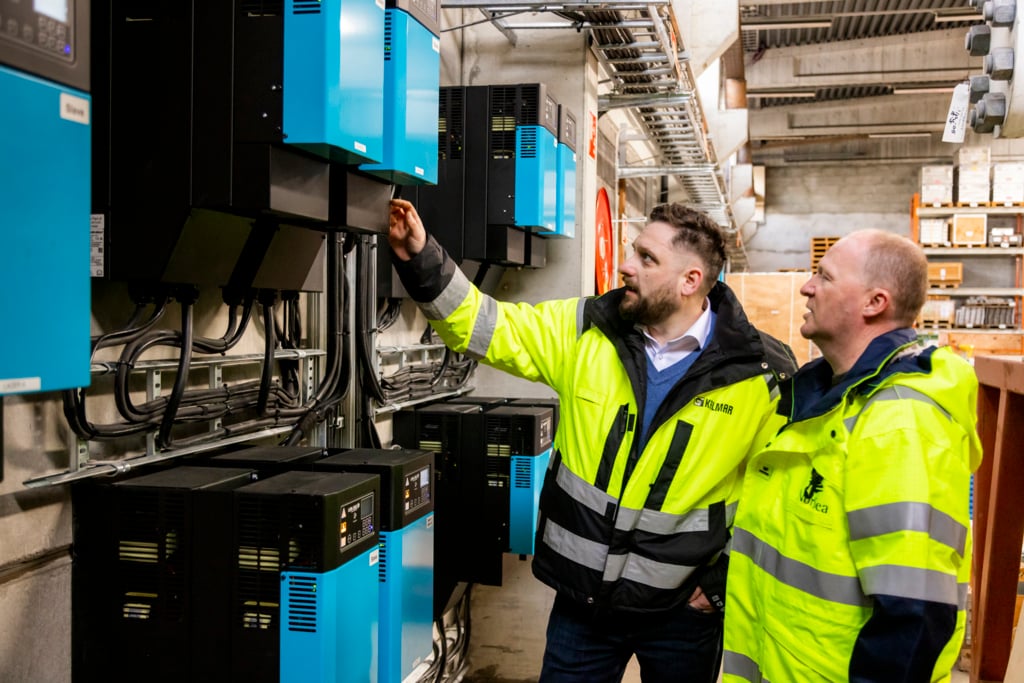
Developing and maintaining the technical qualifications for safe work on high-voltage battery-powered equipment requires a structured, carefully planned approach. The types of work allowed for each job role must be defined in detail, competences need to be documented, and training must be renewed periodically when appropriate.
When planning the responsibilities for various levels of maintenance qualifications, it may be advantageous to exclude some types of repair and maintenance tasks depending on their complexity and frequency. For example, the need for battery pack repairs will occur extremely seldom, so training frontline technicians for this task will likely not be a useful investment for a terminal operator.
9 Optimisation and preventive maintenance
The transition to electric equipment is not just about sustainability; it’s a strategic business decision that requires a new approach to service and maintenance. With well-managed servicing of electric equipment, businesses can not only meet their environmental goals but also improve their safety while achieving maximum uptime, efficiency, and return on investment.
With battery-electric equipment, preventive maintenance becomes even more important than with traditional diesel-powered machines. Compared to an internal combustion engine, the battery modules on an electric machine are basically maintenance-free; however, they do require scheduled checks and measurements by qualified technicians to ensure safe operation at the expected performance level. Battery-electric machines also need to be kept cleaner in day-to-day operations, as excessive dust and dirt may cause problems with the temperature management systems on the vehicles.
In addition to their other immediate operational benefits (reduced noise, no emissions, safer and more ergonomic operation), the latest generation of battery-electric equipment also enables a new level of optimisation in how the machines are used. Performance management tools such as MyKalmar INSIGHT turn real-time operational data from the equipment into actionable insights that can be used to enhance the productivity, safety, and eco-efficiency of the fleet. For example, production and idle times can be assessed on a machine-by-machine basis to improve equipment utilisation rates and eliminate performance bottlenecks in terminal operations.
About the authors

Karl Sohlberg
Service Solutions Design Manager, Kalmar
Karl has over 25 years of experience in maintenance operations and development from several companies within the automotive, truck, construction equipment and heavy material handling industries, having held various positions ranging from operational manager to technical support.
“Kalmar always prioritises the safety of our technicians and our customers, which is something that is important to me personally. I get the opportunity to contribute with my field experience on how the machine should be maintained and repaired in the safest and most efficient way to create value and cost-effective up time for our customers.”

Per-Erik Johansson
Technology Manager Electrification, Kalmar
Per-Erik has more than 40+ years of experience in R&D for Kalmar’s mobile equipment and has for the past five years worked with electrification of the company’s heavy machines, addressing the issues and concerns that come with providing a zero emission solution for customers.
“The electrification journey for our customers includes so many challenges and concerns that need to be resolved, and that is what makes it so exciting! If I can contribute to making the world a better place for my grandchildren, it’s my duty to do so and I’m actually enjoying it very much.”
Disclaimers
The goal of this paper is to provide a brief overview of li-ion battery technology for a non-technical professional readership in the logistics and cargo handling industries. The white paper represents the opinions of the authors, and is the product of professional research. Kalmar can not be held liable for how the information in the white paper is used. The information included was current at the time of writing (January 2026).
Subscribe and receive updates in your email
Subscribe to our publications